
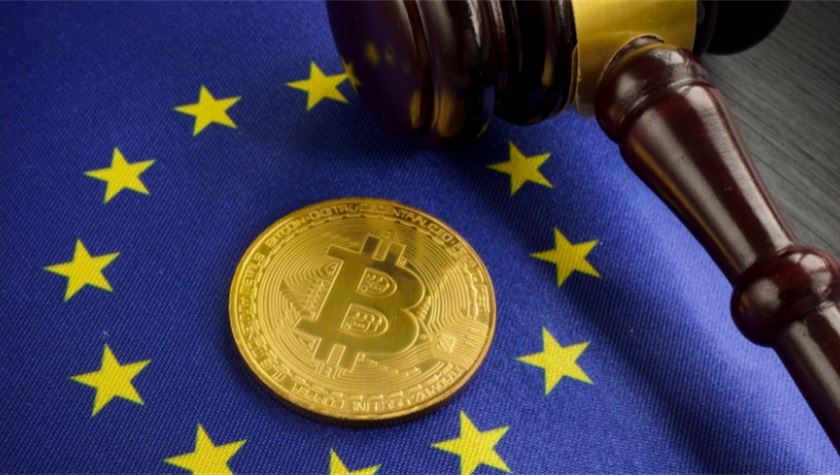
Good for DeFi and NFTs, but bad for stablecoins and, most importantly, no AML on most transactions to user wallets. These are the cornerstones of the outcome of negotiations between the European Council and Parliament. Some things are tough, but for the most part the industry can breathe a sigh of relief. Especially in Germany.
The European Parliament and European Council have agreed on part of the MiCA regulation . This should create Europe-wide regulatory standards for cryptocurrencies.
An essential part of the trialogue negotiations, which followed a draft by the European Parliament , has been concluded with an agreement reached by the Parliament and the Council .
Implementation of the Travel Rule
The greatest point of friction was evidently the implementation of the travel rule . This rule states that "information about the source of the asset and the recipient travels with the transaction and is stored by both parties." . Since the Financial Action Task Force (FATF) decided at the end of 2019 to also apply the Travel Rule to cryptocurrencies , it has been implemented globally.
Council and Parliament have decided the following on the Travel Rule:
Crypto-Assets Service Providers (CASPs) must collect this information and submit it to the relevant authorities if required. This was to be expected and unavoidable.
Bitcoin ATMs are also subject to the regulation.
There will be no thresholds “as crypto asset transactions bypass them very easily.” Parliament was apparently able to push through this position in the negotiations. With it, the EU goes further than most other jurisdictions.
Since very private data is involved, it should not be sent "if there is no guarantee that the recipient's privacy will be respected." This could mean that the Travel Rule for transactions in jurisdictions that do not have European data protection standards apply, does not apply.
The Travel Rule will also apply when the CASPs interact with unhosted wallets. This is the term governments use to describe normal wallets: software that allows users to manage their own keys.
However, there is a threshold for these transactions: from 1,000 euros, the service providers must check whether a wallet actually belongs to a customer.
P2P transactions, i.e. from wallet to wallet without a provider, are exempt from the Travel Rule. This equates to a free pass for truly decentralized DeFi apps.
Stablecoins, NFTs and the ESMA
In addition, MiCa will cover other aspects. Ernest Urtasun from the European Parliament informed about this on Twitter.
Stablecoins are strictly supervised and regulated. They are allowed to transfer a maximum of 200 million euros per day and must hold reserves and allow redemption.
This regulation also applies to algorithmic stablecoins, which should not be possible for them.
NFTs are exempt from regulation. However, derivatives on NFTs, such as fungible ERC tokens, do not.
The European Securities and Markets Authority (ESMA) will become the new “crypto sheriff in the EU”. It will gain new rights to intervene in the crypto economy, maintain a registry of service providers, and more.
Platforms must implement investor protection requirements. For example, they must provide white papers and will be held liable for misleading information.
ESMA will develop "sustainability indicators" for consensus mechanisms to assess their impact on climate and the environment. The EU reserves the right to set minimum standards for an update of the regulation in 48 months. The feared ban on mining is not yet completely off the table.
How the crypto scene evaluates the agreement
The assessments of this unity differ widely. The crypto or bitcoin scene is of course appalled and fears that Europe will be sidelined.
Above all, however, this view seems to be based on a lack of understanding of the regulatory realities. It has been inevitable for years that the Travel Rule will be implemented almost everywhere. The only questions were when and how. It is therefore relatively embarrassing when two prominent Bitcoiners flaunt their complete ignorance of regulation in an open letter to the EU and make vague demands that are not even debatable.
Patrick Breyer, who represents the Pirate Party in the European Parliament, sharply criticizes that the rules "rob law-abiding citizens of their financial freedom". But he also acknowledges “that things looked much worse for a long time.” The negotiations had significantly eased one of Parliament’s key demands – the verification of unhosted wallets.
CoinDesk also rejoices that there are no AML checks for most transfers to unhosted wallets (AML = Anti Money Laundering: Measures against money laundering).
For crypto users and companies, MiCA is certainly no reason to jump for joy. For stablecoins, the regulations are almost devastatingly strict, and the Travel Rule will give all exchanges and service providers a headache. Nevertheless, the industry should breathe a sigh of relief: It was less severe than planned. No ban on "unhosted wallets" , as the EU Commission once brought into play, no automatic mechanism that stamps transactions to or from user wallets as high-risk cases, as Parliament and previously the FATF had called for.
Plus a free pass for DeFi and NFTs.
My Top PicksHoneygain - Passive earner that pays in BTC or PayPalMandalaExchange -The Best no KYC crypto Exchange!
BetFury - Play And Earn BFG for daily Bitcoin and ETH dividends!
Pipeflare - Faucet that pays in ZCash and Matic, Games pay in DAIWomplay - Mobile dApp gaming platform that rewards in EOS and BitcoinCointiply - The #1 Crypto Earning SiteLiteCoinPay -The #1 FaucetPay earner for LitecoinLBRY/Odysee - YouTube Alternative that lets you earn Money by viewing videos!FaucetPay - The #1 Microwallet PlatformFREEBTC - The #1 FaucetPay earner for Satoshi'sFaucetCrypto - An earning/faucet site that pays out instantlyFireFaucet - An earning site that pays better for some than Cointiply
DogeFaucet - Dogecoin Faucet
xFaucet - BTC, ETH, LTC, Doge, Dash, Tron, DGB, BCH, BNB, ZEC, FEY - Claim every 5 minutes
Konstantinova - BTC, ETH, LTC, Doge, Dash, Tron, DGB, BNB, ZEC, USDT, FEY, 25 Claims Daily
Comments
Post a Comment