
The European Union is looking to regulate the crypto market more tightly, and more broadly, the European Central Bank has criticized cryptocurrency. Chairwoman Christine Lagarde previously appeared on TV calling crypto worthless.
But do you know who the "enemy" is? To demonstrate this, the European Central Bank (ECB) recently published a report titled “Decoding Financial Stability Risks in Crypto Asset Markets”.
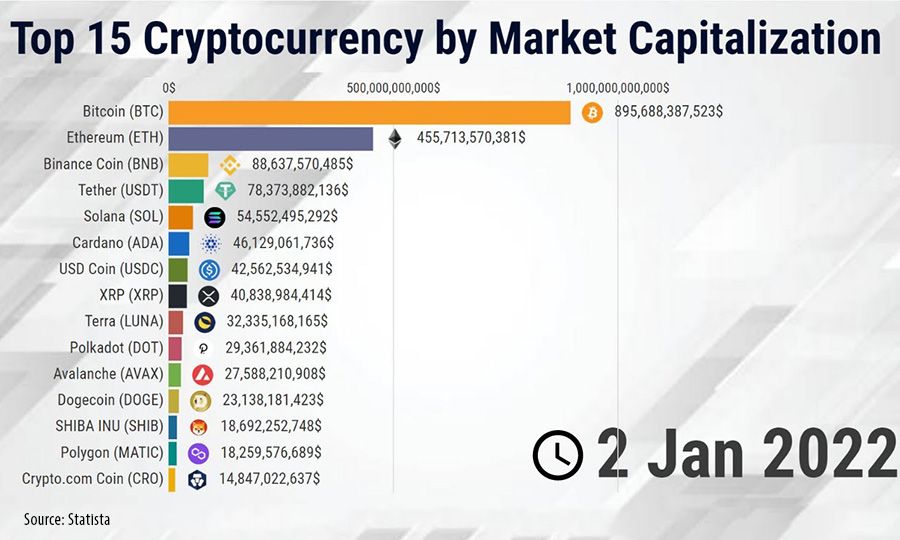
One thing is certain, and you don’t need a report for that, interest in cryptocurrencies has increased dramatically since Corona. Fortunately, that is also the conclusion of the ECB. They write that despite the recent drop, overall the crypto market is 7 times bigger than it was in early 2020.
Consumers play a big role
Their report included several consumer surveys in Belgium, Germany, Spain, France, Italy and the Netherlands.
These surveys revealed that around 10% of households could own cryptocurrency. Interestingly, most owners said they owned less than $5,000, while only 6% said they owned more than $30,000 worth of crypto.
But who actually invests in cryptocurrency? These are mainly young adult men and people with a high level of education. And that's an interesting statistic: if their financial literacy ranks at the highest or lowest level, there's a good chance someone owns cryptocurrency.
Institutional investors want (indirect) crypto
The report not only looks at the role of consumers, but also that of institutional investors. They write that the correlation between cryptocurrency and stock prices increased during (and after) the market stress of March 2020, as well as during the market declines of December 2021 and May 2022.
According to the report, this suggests that during periods of volatility, the crypto market is more closely tied to traditional risk assets, a trend that may be due in part to greater institutional investor participation.
If we look at the past 15 days, bitcoin has failed to stay above $40,000, the bitcoin price is currently 37% lower than it was in early 2022. Over the same 15-day period, Shopify stock fell down 76%, Snap crashed 73%, Netflix fell 70%, and even Cloudflare fell 62%. These are all big tech stocks, so a bit of Bitcoin in a portfolio might not be such a bad idea after all. According to the ECB, there is certainly a demand among institutional investors for some bitcoin to add to their portfolio.
Fidelity Digital Assets also surveyed European institutional investors, with 56% reporting exposure to cryptocurrencies. That's a 45% increase from 2020. According to the ECB, this could be because government actions could be interpreted as approving crypto assets. For example, German institutional investment funds have been allowed to invest up to 20% of their holdings in cryptocurrency since July 2021.
More investment opportunities
This is made possible in part by the increasing availability of crypto-based derivatives and securities on regulated exchanges, such as futures, exchange-traded notes, exchange-traded funds and OTC-traded trusts, which have grown in popularity in Europe in recent years.
These products, along with clearing facilities, have made crypto assets more accessible to investors as they can be traded on traditional exchanges. This also ensures that the investor does not have to worry about the safekeeping and security of their cryptos. Still, Europe is lagging behind the rest of the world, with only 20% of cryptocurrencies located on our continent.
Cryptocurrency carries risks
According to the report, institutional investor interest in cryptocurrencies will only increase, but this will come with more risks. This is partly because European banks offer derivatives on crypto without actually stocking the crypto. These derivative crypto products track the performance of the various crypto courses. The researchers say:
“Any crypto-based exposure by institutions, particularly when the assets involved are unsecured, could put capital at risk, with potential knock-on effects on investor confidence, lending and financial markets if exposure is large enough.”
To mitigate these risks and protect investors from themselves (sigh), proposals for tighter regulation have been put forward. These still have to be approved.
One of the proposals included the Markets in Crypto-Assets Regulation (MiCA) to strengthen markets and control regulatory uncertainties. The MiCA proposal was published back in September 2020 and is yet to be approved. This means that it will not be applied before 2024 as it is expected to be applied 18 months after it comes into force.
My Top PicksHoneygain - Passive earner that pays in BTC or PayPalMandalaExchange -The Best no KYC crypto Exchange!
BetFury - Play And Earn BFG for daily Bitcoin and ETH dividends!
Pipeflare - Faucet that pays in ZCash and Matic, Games pay in DAIWomplay - Mobile dApp gaming platform that rewards in EOS and BitcoinCointiply - The #1 Crypto Earning SiteLiteCoinPay -The #1 FaucetPay earner for LitecoinLBRY/Odysee - YouTube Alternative that lets you earn Money by viewing videos!FaucetPay - The #1 Microwallet PlatformFREEBTC - The #1 FaucetPay earner for Satoshi'sFaucetCrypto - An earning/faucet site that pays out instantlyFireFaucet - An earning site that pays better for some than Cointiply
DogeFaucet - Dogecoin Faucet
xFaucet - BTC, ETH, LTC, Doge, Dash, Tron, DGB, BCH, BNB, ZEC, FEY - Claim every 5 minutes
Konstantinova - BTC, ETH, LTC, Doge, Dash, Tron, DGB, BNB, ZEC, USDT, FEY, 25 Claims Daily
Comments
Post a Comment